
Sirât - Review
Laxe’s range of ideas can be both baffling and transcendent - a Tarkovsky-esque descent into despair with too many conflicting points.

3 / 5
The booming soundsystem set up in the Southern Moroccan desert opens Oliver Laxe’s fourth feature, the Cannes favourite Sirât. The immediacy of which we are thrust into a rave fuelled soundscape speaks to the film’s insistence on immersing the audience in its themes of subculture, spirituality and hope. Having now lived in Morocco for over a decade Laxe understands his vast desert landscape and uses it to put his characters in increasingly dangerous and wild situations. Despite his handle on how his film looks he struggles to merge his ideas which eventually overburden this otherwise impressive project.
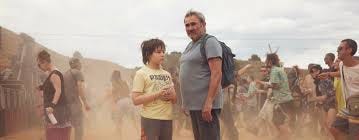
We follow father and son Luis (Sergi López) and Estaban (Bruno Núñez) searching for their lost daughter and sister who left five months ago and whom they think is at these travelling desert raves. Laxe allows us to absorb the atmosphere before beginning the bulk of the narrative and the early scenes of euphoric dance and authentic use of real life ravers gives the film a natural yet dreamlike quality. After approaching a group who know of a rave deeper into the desert Luis decides to follow them, thus beginning a paired down Mad Max style descent into a pilgrimage seemingly to nowhere. The term Sirât symbolises a spiritual journey - a bridge where souls cross over hell that is sharper than a sword and thinner than a hair. Laxe is telling us that life provides tragedy and ecstasy in equal measure, that nothing is sacred and the human condition is confusing and often cruel. The first half of his film gets this across through this contemplative and meandering road trip but he sensationalises the second half and the film loses the point.
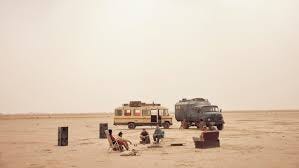
The desert looks equally beautiful and terrifying all while being wonderfully shot by cinematographer Mauro Herce who also did Laxe’s previous Fire Will Come. Landscapes seem of another world and the ragtag cast of Jade (Jade Oukid), Stef (Stefania Gadda), Tonin (Tonin Janvier) Bigui (Richard Bellemy) and Josh (Joshua Liam Henderson) do feel somewhat spiritually connected through this love of music and dance. Halfway through the narrative decides to take a tragic and unexpected turn and ultimately starts to fall apart. The film has no idea what to do with the major tragic event and moves on almost immediately, never providing the necessary emotional fallout that should be so obviously present. It barrels along to a rather baffling, albeit admittedly well made final set piece that feels like it’s been taken from a different film. Perhaps the vision is to link these unfortunate events with some sort of divine judgement, life is unfair and you’ll be punished for being different or living alternatively. If the bridge to hell is through Sirât the path needn’t have been so shaky and twisty, it works better when it’s straighter and further on course.
Despite its flaws it’s hard not to admire the ambition and while many reactions have suggested this is Laxe’s masterpiece it could well be his next that holds this status. It is better for a filmmaker to take big swings that don’t work than play it safe and Sirât is never less than engaging but perhaps a more seasoned and less involved filmmaker would have exercised some restraint and created a more cohesive final result.
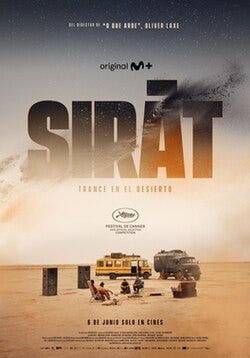
Seen on 4/3/26 at Odeon Brighton.
Thank you fo your review. I am still processing this film and like to read other peoples thoughts about it. Yes, I agree, it's a very ambitious work and I admire it. But it does not sit well with me. By 2/3 of the film I was still asking myself who are those people and why I need to follow them, since I knew just a few fragment about main characters and their motivation. I am still thinking about this film though, trying to figure “my way” out of it, which, I guess, keeps it memorable. Makes it good? I don't know...